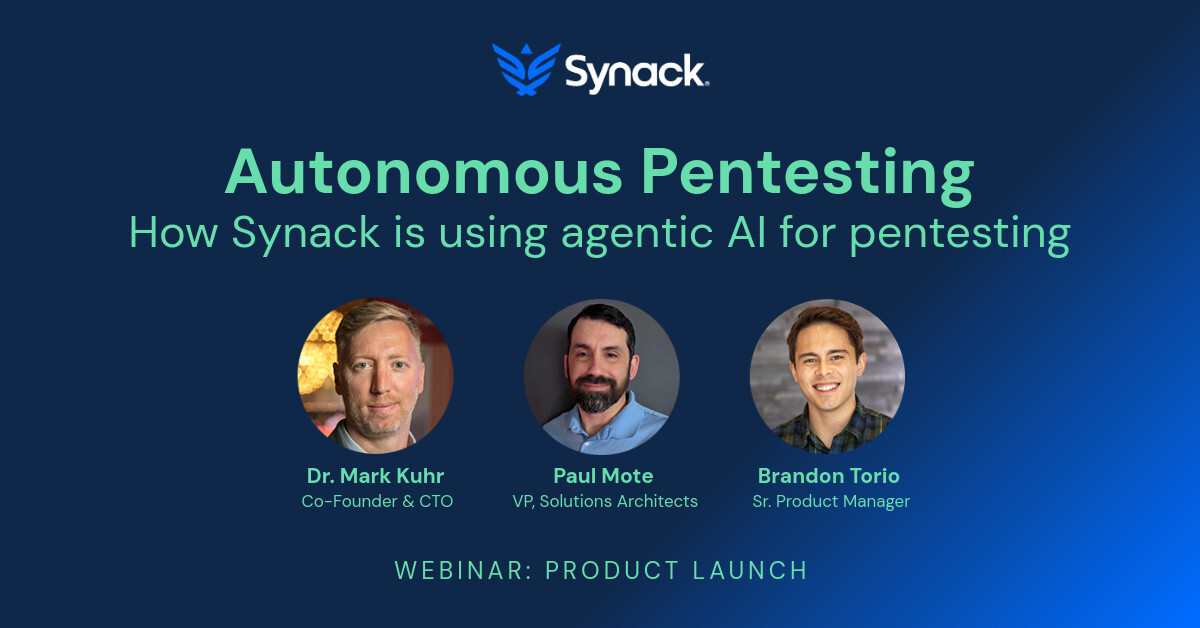

At Synack, we recently released Sara Pentest, an agentic AI powered penetration test with human oversight. As security teams navigate the next frontier of pentesting and agentic AI, an important component to technical requirements will be legal and security guardrails. We touched on this in our first ebook on agentic AI, a, “Guide to Agentic AI and Pentesting: What It Is and How It Works.”
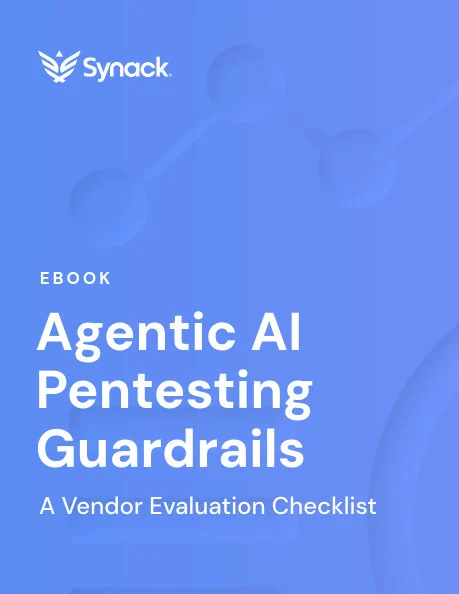
In our latest ebook, “Agentic AI Pentesting Guardrails: A Vendor Evaluation Checklist” we double click on the evolution of pentesting controls, agentic AI operational safeguards, and how Synack uses safeguards for its own agents. The appendix also includes a vendor evaluation to make sure your AI pentest providers take these components seriously. Make sure your next autonomous pentest provider is a trusted partner, not a critical liability to your organization.
Translating Traditional Pentesting Evaluation Frameworks like NIST, OWASP, and SANs into Guardrails
As you evaluate your agentic AI solution you need to ask these questions, and more to validate that the agentic AI solution is using traditional human controls as AI guardrails:
- Is there a defined scope of boundaries that agents are operating in within the agreed testing environment? Does it include platform controls that allow for real-time pause/resume so you can intervene directly with a click of the button?
- Does the solution have embedded rules of engagement built into the agent workflow so that it is technically enforced by the platform? Does that also include prohibited testing techniques and technical controls that enforce “No destructive actions” as a contractual clause in the RoE?
- Does the platform provide detailed real-time logs that capture all test activity and offer real-time visibility into attack surface coverage that tracks which assets have been tested?
- If the AI agent encounters an ambiguous asset, does the system include correction loops that require human-in-the-loop approval before proceeding?
While this is just a short list of questions to ask and validate, our Agentic AI Pentesting Guardrails ebook will provide you with many more ways to assess a provider’s governance, policies and safety posture to make sure you have a clear understanding of how the solution will behave under real enterprise conditions.
At Synack, many of these questions were top of mind as we built Sara Pentest from the ground up. Sara Pentest is specifically built to test like a responsible human expert and the AI agents are bound to specific rules that are hard-coded into its safeguards. Below are some of the safeguards used in Sara Pentest that we outline in the ebook and why they matter in your evaluation process.
Safeguards of Sara Pentest and Why They Matter in Evaluating Agentic AI Pentesting Solutions
| Safeguard | What It Is | Why It Matters (The TL;DR) |
| Strict Code Enforcement | Sara is technically designed to stay within approved IP ranges and applications, with processes that prevent lateral movement or “accidental discovery” outside the designated assets. | AI stays in scope, and doesn’t touch systems that it shouldn’t |
| Secure Data Handling | The platform blocks any attempt to upload client-related content to third-party systems, ensuring customer data stays within the secure environment. | Keeps customer data private, reduces accidental data leaks |
| Prohibited Attack Techniques | Just like our human RoE, Sara is technically blocked from performing any intentional Denial of Service (DoS) testing, password brute-forcing or spraying, or testing third-party services. | Prevents service disruption and avoids legal and/or operational issues when testing |
| Layered Architectural Controls | A multi-layer architecture featuring an Execution Control Layer, Agent Orchestration, and State Management ensures every action is traceable, coordinated, and respects dependencies. | AI behavior is predictable and easy to audit |
| Destructive Command Blocklists | Our experience with human-found exploits informs Sara’s Command Limits. A set of regular expressions proactively blocks high-risk operations before execution, including SQL DROP, SQL DELETE, and filesystem commands like rm -rf or any operation against critical system directories. | Stops high-risk or destructive commands from executing BEFORE they run to protect systems and data. |
| Controlled Post-Exploitation | Synack knows the danger of an uncontrolled pivot. If Sara gains initial access (e.g., via SQLi), the agent is blocked from “living off the land” or performing free exploration. Agent actions are limited to proving the vulnerability, not simulating a full-scale breach. | Limits AI action to vulnerability validation only, showing impact without creating risk. |
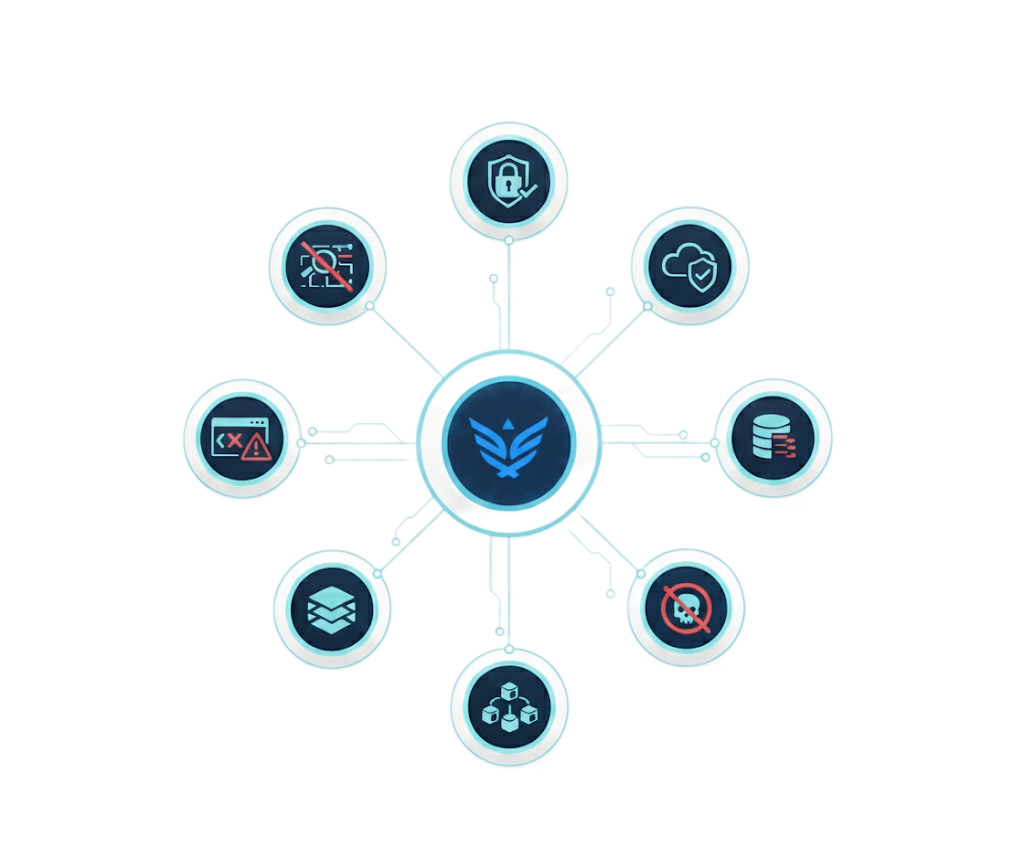
Why Guardrails Matter When Evaluating Agentic AI Pentesting
As AI is being integrated into every facet of technology, and becomes more autonomous, traditional pentesting controls are no longer mapping directly to these agentic workflows. Agentic systems plan, execute and make autonomous decisions, creating new security challenges. Guardrails are no longer optional, they create a foundation for trustworthy AI testing and ensure your network remains secure.
Putting Guardrails Into Practice for Secure AI Testing
The ultimate goal of this ebook isn’t hypothetical, it is a clear guide for how organizations can assess and implement guardrails that are safe, auditable, and predictable for agentic AI testing. By taking traditional human pentesting rules and translating those into machine learning, autonomous agents can operate at the speed and scale of AI without sacrificing control, security and compliance.
Download the eBook
To dive deeper into the framework for assessing Agentic AI-powered pentesting and start understanding the guardrails that align with your organization, download the full eBook here.