AI Pentesting for Continuous Security Validation. Test Your Entire Attack Surface. Validate Real Risk. AI finds more vulnerabilities. Human experts prove what actually matters.

Most organizations test only a fraction of their attack surface. Sara AI Pentesting expands coverage across your environment, while the Synack Red Team validates real, exploitable risk. Together, they deliver continuous security validation—not periodic testing.
You're Pentesting a Fraction of Your Environment. Attackers Aren't.

Security teams prioritize penetration testing—but most environments remain largely untested.

Modern attack surfaces are dynamic, distributed, and constantly changing. Traditional penetration testing—limited in scope and frequency—cannot keep up.

As a result:

  • Critical vulnerabilities remain undiscovered
  • Security coverage is incomplete
  • Attack paths go untested

Attackers don’t operate within a limited scope. Your testing shouldn’t either.

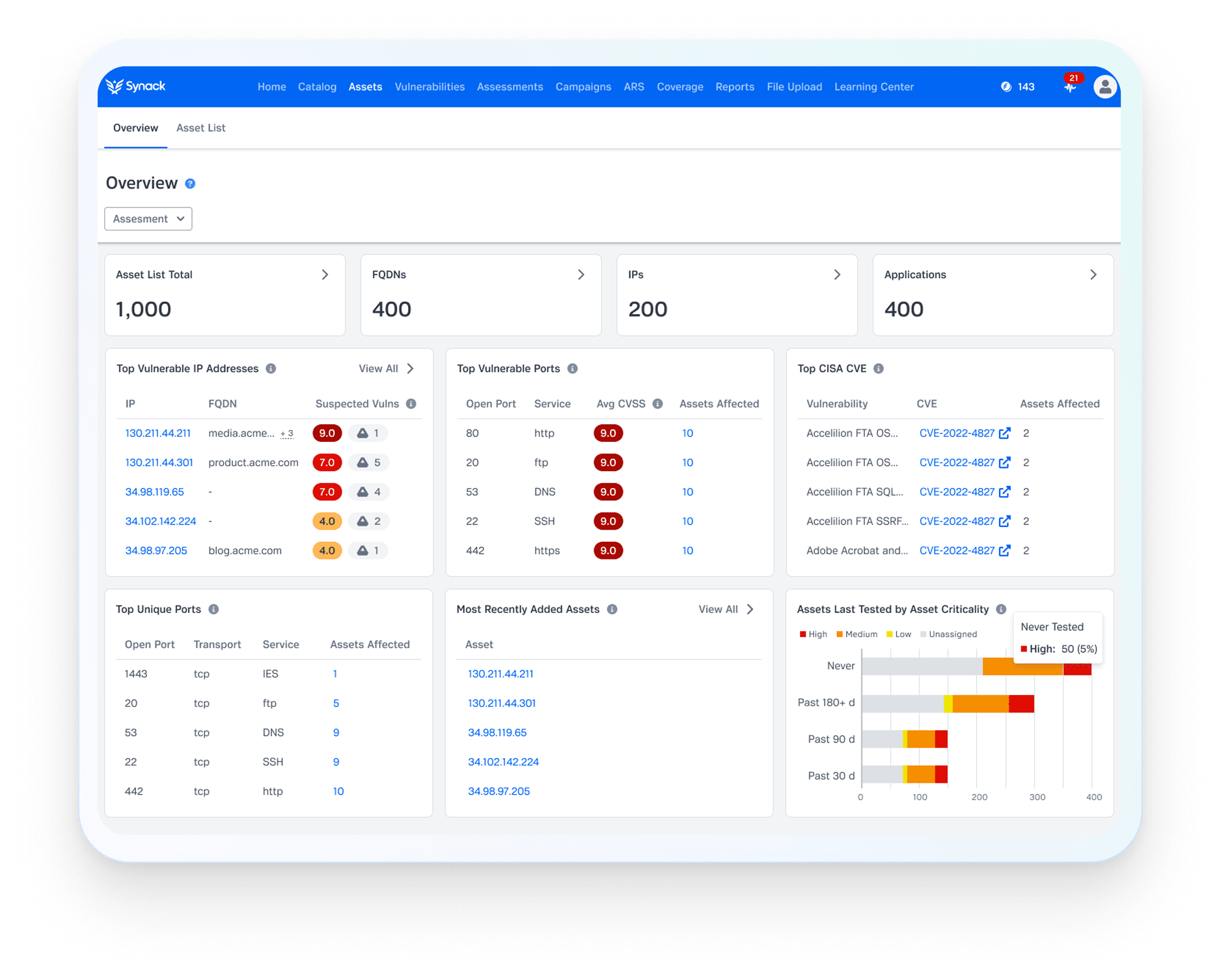
Synack platform Asset List dashboard showing 100 assets across IPs, FQDNs, and applications, with columns for IP address, open ports, cloud provider, exploitable and suspected vulnerability severity scores, and last scan and test statuses.

From Periodic Testing to Continuous Security Validation

The industry is shifting from point-in-time testing to continuous validation.

What is AI Pentesting?

AI pentesting uses artificial intelligence to autonomously discover, prioritize, and analyze vulnerabilities across an organization’s attack surface — testing more of the environment, more often, than manual approaches can. Instead of testing once or twice a year, leading organizations are:

  • continuously exploring their attack surface
  • identifying vulnerabilities at scale
  • validating real-world exploitability

Explore how this shift is reshaping security programs in our security research and insights.

Introducing Sara AI Pentesting

Sara (Synack Autonomous Red Agent) expands security testing across your entire attack surface using AI-driven discovery and analysis.

It acts as a force multiplier for offensive security – scaling testing far beyond what manual approaches can achieve.

But discovery alone is not enough.

That’s why Synack combines AI with one of the world’s most trusted communities of security researchers on the Synack Platform.

AI Finds More. Humans Prove What Matters.

Synack delivers continuous security validation through a unique combination of AI and human expertise.
 

How AI and Human Validation Work Together

Sara
AI Pentesting

Expands coverage across your attack surface with speed and scale

Synack Red Team

Validates real, exploitable vulnerabilities through real-world penetration testing

Synack Platform

Combines both to deliver continuous, trusted security outcomes

This is not automation. This is validated security at scale.

How Sara AI Pentesting Works

AI Expands Attack Surface Coverage

Sara runs continuously across your full attack surface — testing more assets, more often, than any manual approach can match. Here’s the four-step flow:

Discover

AI continuously explores your attack surface

Analyze

Sara AI Pentesting prioritizes findings and maps attack paths

Validate

The Synack Red Team confirms exploitability

Deliver

You receive validated, actionable findings—not noise

Why Traditional Pentesting Falls Short

Traditional pentesting models were built for a different era.

They rely on:

  • limited scope
  • point-in-time engagement
  • manual-only workflows

They cannot keep up with modern environments.

See how Synack compares on our penetration testing solutions page.

Built for Modern Security Teams

  • Enterprises with complex environments
  • Cloud and SaaS-first organizations
  • Security teams with limited internal resources
  • Teams that need continuous validation—not just compliance checklists

Learn the core components of Sara AI Pentesting.


See Sara AI Pentesting in Practice

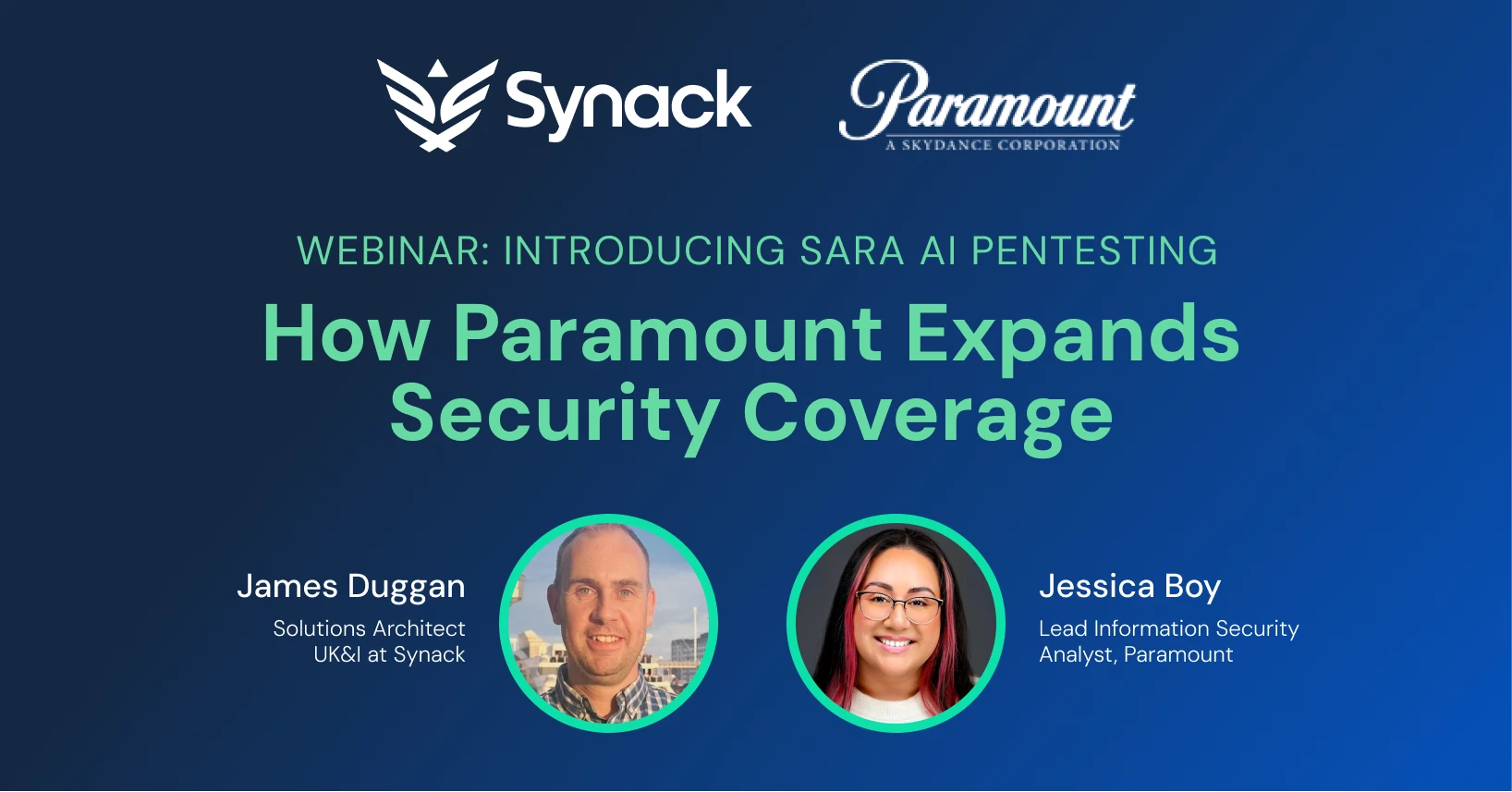
Organizations like Paramount are already expanding their security coverage using AI pentesting combined with human validation.

Powered by Agentic AI

How Agentic AI Powers Continuous Testing

Sara (Synack Autonomous Red Agent) uses agentic AI to autonomously deploy swarms of agents that:

  • Explore attack surfaces
  • Identify vulnerabilities
  • Prioritize findings
  • Simulate attacker behavior

This enables faster, broader, and more scalable testing.

Start Testing What Actually Matters

Stop relying on limited, point-in-time testing.
Start continuously validating your security posture with AI and human expertise.

Frequently Asked Questions
Close
What is AI Pentesting?

AI pentesting uses artificial intelligence to autonomously discover vulnerabilities across an organization’s attack surface. Unlike traditional pentesting, it scales continuously and tests far more of the environment than manual approaches can cover.

Close
How does AI pentesting differ from traditional penetration testing?

Traditional pentesting is limited in scope and runs once or twice a year. AI pentesting expands coverage continuously, identifies vulnerabilities at scale, and adapts to environments that change weekly.

Close
How does AI expand attack surface coverage?

AI agents continuously explore assets across cloud infrastructure, SaaS applications, APIs, and internal systems — testing far more of the environment than human pentesters can reach in a fixed engagement.

Close
How does human validation reduce false positives in pentesting?

AI surfaces a large volume of potential vulnerabilities, but not all are exploitable in the real world. Human experts on the Synack Red Team validate each finding to confirm real, exploitable risk — so security teams act on signal, not noise.

Close
What is continuous security validation?

Continuous security validation is the ongoing process of testing, validating, and improving security posture in real time, rather than relying on point-in-time assessments. It pairs continuous discovery with continuous validation to keep pace with how environments — and attackers — actually move.

Close
What is agentic AI in the context of penetration testing?

Agentic AI refers to autonomous systems designed to take initiative and achieve complex security goals with minimal human intervention. Unlike static scanners, agentic AI like Sara uses specialized agents to validate vulnerabilities by emulating real attacker behavior—executing, prioritizing, or abandoning actions based on real-time analysis of the target’s responses.

Close
How does automated AI pentesting differ from a traditional vulnerability scan?

While a vulnerability scan identifies potential risks from a known list, AI pentesting (like Sara Triage) goes further by actively adjudicating findings to determine if they are truly exploitable. Sara automates the testing phase, allowing vulnerabilities to be identified much faster than manual human testing, while still maintaining human review at the end for final validation.

Close
What LLMs do Synack’s AI features leverage?

Synack uses GCP Vertex AI to leverage Google Gemini (to summarize scoping information in the Synack Assessment Creation Wizard) and Anthropic Claude (for Sara services).

Close
Do the LLMs Synack leverages train on or retain customer data?

No. The underlying LLMs used to power Sara and other AI features and services do not retain or train on any Synack customer data. Synack maintains full control over where data is processed and stored at rest.

Close
Does Synack train Sara or any other AI feature or service on customer data?

No, Synack does not use customer data for training AI features or services at this time.

Close
What safety guardrails are in place to prevent service impact?

Sara operates within a Layered Validation Architecture to ensure all actions stay within approved scopes. Some key safety functions include:

  • Destructive Command Blocking: The filter proactively identifies and drops commands across nine infrastructure categories that could cause service disruption, such as mass deletion of databases or virtual machines.
  • Strict Scope Enforcement: Sara is technically bounded to stay within your approved IP ranges and web applications, with built-in processes that prevent unauthorized lateral movement.
  • Rules of Engagement (RoE) Compliance: The system automatically enforces a strict RoE that prohibits intentional Denial of Service (DoS) testing, password brute-forcing, uncontrolled post-exploitation activities, or interaction with third-party services.
Close
Can automated AI pentesting handle complex authentication like MFA or Captcha?

Currently, bypassing Captcha remains a challenge as it is specifically designed to detect bots; testing is best performed on targets without it. Support for MFA (Multi-Factor Authentication) and OTP (One-Time Passwords) is not available now, but is on the roadmap.

Close
What types of vulnerabilities can Sara AI detect and validate?

Sara tests for a wide range of web and host vulnerabilities, including but not limited to:

  • Web: SQL Injection (SQLi), Cross-Site Scripting (XSS), IDOR, SSRF, and Command Injection.
  • Host: Weaknesses in protocols like SSH, FTP, SMTP, and SMB, including known exploits like EternalBlue.
  • CVE-Based: Mapping and validating specific vulnerabilities against the latest intelligence sources.
Close
How does the Sara stay updated on new and novel vulnerabilities?

In addition to open source vulnerability intelligence, Synack sources vulnerability intelligence from a third-party provider, ensuring the agent has the necessary context for the latest Proof of Concepts (POCs) and CVE information. Performance is further maintained by testing agents against internal benchmarks to prevent “drift” when underlying LLM models are updated.

Close
Can Sara be used to test internal environments?

Currently Sara can only test external web and host assets. Testing of internal assets is on the roadmap.

Close
What is AI Pentesting?

AI pentesting uses artificial intelligence to autonomously discover vulnerabilities across an organization’s attack surface. Unlike traditional pentesting, it scales continuously and tests far more of the environment than manual approaches can cover.

Close
How does AI pentesting differ from traditional penetration testing?

Traditional pentesting is limited in scope and runs once or twice a year. AI pentesting expands coverage continuously, identifies vulnerabilities at scale, and adapts to environments that change weekly.

Close
How does AI expand attack surface coverage?

AI agents continuously explore assets across cloud infrastructure, SaaS applications, APIs, and internal systems — testing far more of the environment than human pentesters can reach in a fixed engagement.

Close
How does human validation reduce false positives in pentesting?

AI surfaces a large volume of potential vulnerabilities, but not all are exploitable in the real world. Human experts on the Synack Red Team validate each finding to confirm real, exploitable risk — so security teams act on signal, not noise.

Close
What is continuous security validation?

Continuous security validation is the ongoing process of testing, validating, and improving security posture in real time, rather than relying on point-in-time assessments. It pairs continuous discovery with continuous validation to keep pace with how environments — and attackers — actually move.

Close
What is agentic AI in the context of penetration testing?

Agentic AI refers to autonomous systems designed to take initiative and achieve complex security goals with minimal human intervention. Unlike static scanners, agentic AI like Sara uses specialized agents to validate vulnerabilities by emulating real attacker behavior—executing, prioritizing, or abandoning actions based on real-time analysis of the target’s responses.

Close
How does automated AI pentesting differ from a traditional vulnerability scan?

While a vulnerability scan identifies potential risks from a known list, AI pentesting (like Sara Triage) goes further by actively adjudicating findings to determine if they are truly exploitable. Sara automates the testing phase, allowing vulnerabilities to be identified much faster than manual human testing, while still maintaining human review at the end for final validation.

Close
What LLMs do Synack’s AI features leverage?

Synack uses GCP Vertex AI to leverage Google Gemini (to summarize scoping information in the Synack Assessment Creation Wizard) and Anthropic Claude (for Sara services).

Close
Do the LLMs Synack leverages train on or retain customer data?

No. The underlying LLMs used to power Sara and other AI features and services do not retain or train on any Synack customer data. Synack maintains full control over where data is processed and stored at rest.

Close
Does Synack train Sara or any other AI feature or service on customer data?

No, Synack does not use customer data for training AI features or services at this time.

Close
What safety guardrails are in place to prevent service impact?

Sara operates within a Layered Validation Architecture to ensure all actions stay within approved scopes. Some key safety functions include:

  • Destructive Command Blocking: The filter proactively identifies and drops commands across nine infrastructure categories that could cause service disruption, such as mass deletion of databases or virtual machines.
  • Strict Scope Enforcement: Sara is technically bounded to stay within your approved IP ranges and web applications, with built-in processes that prevent unauthorized lateral movement.
  • Rules of Engagement (RoE) Compliance: The system automatically enforces a strict RoE that prohibits intentional Denial of Service (DoS) testing, password brute-forcing, uncontrolled post-exploitation activities, or interaction with third-party services.
Close
Can automated AI pentesting handle complex authentication like MFA or Captcha?

Currently, bypassing Captcha remains a challenge as it is specifically designed to detect bots; testing is best performed on targets without it. Support for MFA (Multi-Factor Authentication) and OTP (One-Time Passwords) is not available now, but is on the roadmap.

Close
What types of vulnerabilities can Sara AI detect and validate?

Sara tests for a wide range of web and host vulnerabilities, including but not limited to:

  • Web: SQL Injection (SQLi), Cross-Site Scripting (XSS), IDOR, SSRF, and Command Injection.
  • Host: Weaknesses in protocols like SSH, FTP, SMTP, and SMB, including known exploits like EternalBlue.
  • CVE-Based: Mapping and validating specific vulnerabilities against the latest intelligence sources.
Close
How does the Sara stay updated on new and novel vulnerabilities?

In addition to open source vulnerability intelligence, Synack sources vulnerability intelligence from a third-party provider, ensuring the agent has the necessary context for the latest Proof of Concepts (POCs) and CVE information. Performance is further maintained by testing agents against internal benchmarks to prevent “drift” when underlying LLM models are updated.

Close
Can Sara be used to test internal environments?

Currently Sara can only test external web and host assets. Testing of internal assets is on the roadmap.