
Introducing the Glasswing-Readiness Assessment
In my last post, we looked at the emergence of Anthropic’s Mythos and how it has collapsed the exploit timeline from weeks to days. But once you accept that the speed of the adversary has changed, a more difficult question remains for security leaders: What do we actually do now?
The shift signaled by Project Glasswing isn’t just about acceleration; it’s about a total change in how attacks are explored and scaled. To survive this, we have to stop treating security as a checklist and start treating it as an attack surface coverage problem. That’s why we create the Glasswing-Readiness Assessment to show how your environments hold up against AI-driven attack models.
Where Most Security Programs Break
When you map the capabilities of AI-driven offensive models to a real enterprise environment, the structural gaps become clear. Traditional security models break in three specific places:
- Stability: Point-in-time testing assumes your environment is static. It’s not. While your remediation cycles might move in weeks, AI-driven exploit timelines are moving in hours.
- Reconnaissance: Most organizations lack a complete view of their attack surface. AI-driven reconnaissance will find the legacy protocols and forgotten dependencies that internal teams don’t even know exist.
- Isolation: Most tools treat vulnerabilities as individual findings. Real attacks—especially those led by AI—succeed by chaining seemingly minor issues together. If you’ve only validated them in isolation, you haven’t actually tested your defenses.
The Real Problem Is Attack Surface Coverage
Most organizations aren’t short on tools; they are short on coverage. Currently, the average organization only tests about 32% of its attack surface. This is where the crown jewels strategy fails. In an AI world, the issue is no longer just whether vulnerabilities exist, but whether anyone has explored how they can be exploited in combination across the entire environment. Defenders need the same capability as the attackers: the ability to explore attack paths at scale and speed.
Fighting AI with AI: The Synack Approach
This is where the Synack platform fits. Our role is to find what an attacker would actually exploit and do it continuously so you aren’t always reacting after the fact. We do this through a model that ensures neither technology nor talent becomes the bottleneck:
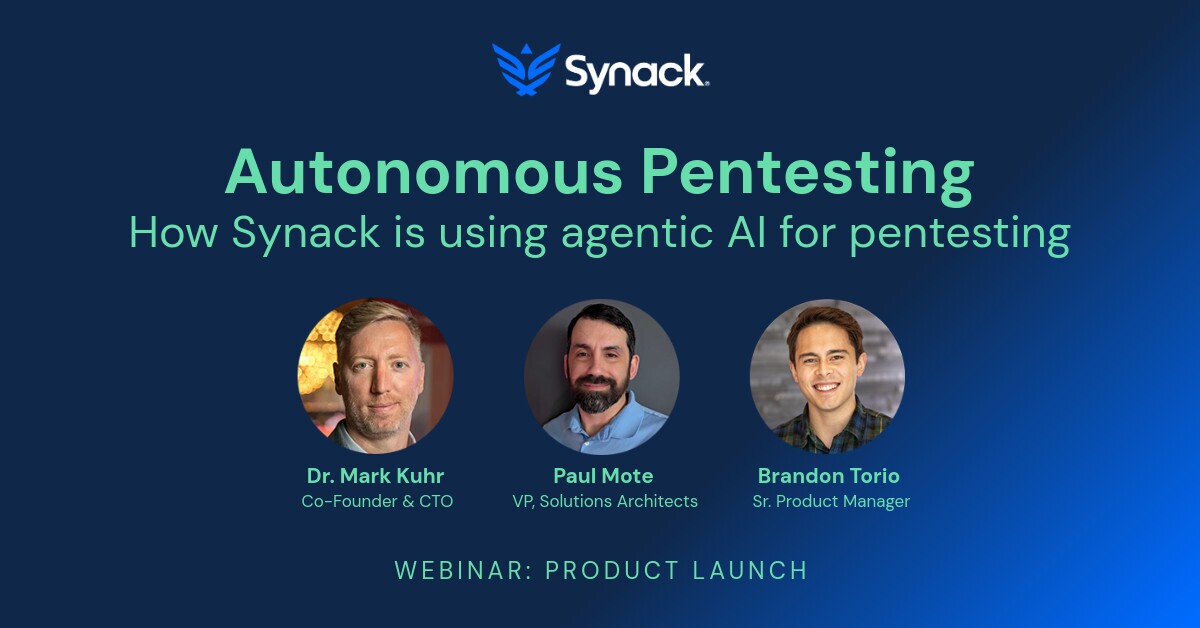
- Sara (Synack Autonomous Red Agent): We are investing heavily in agentic capabilities. Sara uses AI to perform the Glasswing-style exploration—mapping the surface and identifying potential exploit paths across your entire environment autonomously. If you want to see how this applies in your own environment, you can start with a trial of Sara Pentest.
- The Synack Red Team (SRT): Automation expands the surface you can explore, but it doesn’t replace judgment. Our vetted researchers validate what actually matters in real-world scenarios, chaining vulnerabilities and eliminating the noise of false positives.
It’s important to be clear about what this model is. Synack is a penetration testing platform designed to find and validate exploitable vulnerabilities. As offensive AI capabilities spread from controlled research environments to nation-state actors and beyond, you need a partner who provides unfiltered validation. You still need remediation capability and leadership alignment to act, but you can’t act on what you haven’t found.
A Practical Starting Point: Glasswing-Readiness Assessment
The gap between what exists in a research lab and what is used in the wild is narrowing faster than most expect. The companies navigating this shift successfully are not waiting for the next compliance cycle. They are treating this as a structural shift in the nature of risk. To understand what that means for you and your team, start with these three questions:
- What does your real attack surface look like to an AI?
- What can already be discovered by an autonomous agent?
- Where does your current testing model break?
The Glasswing-Readiness Assessment is designed to answer these directly. The goal is to understand your exposure under real-world conditions before an adversary does the work for you.
Frequently Asked Questions
Why is patching no longer enough?
Patching addresses known vulnerabilities, but AI-driven attackers discover new attack paths continuously. You can’t patch a path you haven’t validated as a risk.
What is continuous penetration testing?
It is an ongoing assessment of your environment that reflects how attacks actually happen—continuously, rather than annually or quarterly.
How does AI change penetration testing?
AI expands coverage by exploring more of the attack surface, faster. However, human researchers (like the SRT) are still required to understand business logic and validate real exploitability.
What should organizations prioritize right now?
Focus on three things: understanding your full attack surface, moving to continuous validation, and compressing the time between discovery and action.
How can I assess my exposure to AI-driven attacks?
A Glasswing-Readiness assessment is the most direct way to see what an AI-driven attacker can already find in your specific environment.