
TL;DR
- Modern cloud environments change faster than annual penetration tests can track
- Continuous security validation combines ongoing testing, agentic AI, and elite vetted researchers to identify exploitable vulnerabilities as environments change
- Synack combines 1,500+ rigorously vetted SRT researchers with Sara, its agentic AI, to deliver penetration testing as a service at enterprise scale
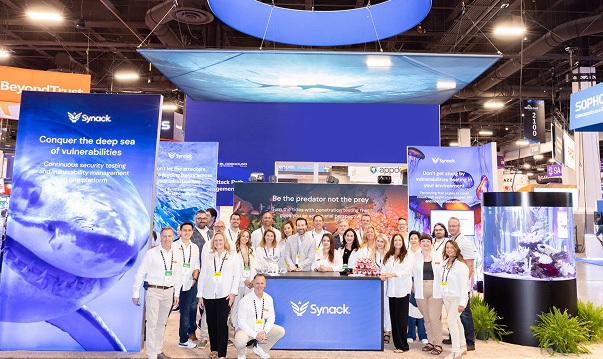
- At RSA, Synack was named Market Leader in AI-Powered Cybersecurity and Trailblazer in PTaaS at the Global Infosec Awards
- Organizations using this model have reduced MTTR by 47% and cut total security testing costs by 32%
The Question Every Board Is Asking
Cybersecurity environments grow more complex every year. Cloud infrastructure expands daily. New applications appear. APIs multiply. Attackers increasingly use automation and purpose-built AI tools—including offensive tools like GhostGPT—to identify weaknesses faster than security teams can remediate them.
At RSA 2026, the recurring theme across the keynote stages and the expo floor was that the modern attack surface is simply outpacing traditional testing methods. With AI-driven development and dynamic cloud scaling, the gap between point-in-time testing and real-time risk has become a structural liability.
Boards and executives are now asking a deceptively simple question: How do we know we are actually secure?
Compliance frameworks and periodic vulnerability scans provide useful signals. But they do not answer that question. They tell you whether controls exist on a given date. They do not tell you whether those controls withstand real-world attacks as environments change. This is why continuous security validation has become a strategic priority.
What Is Continuous Security Validation?
Continuous security validation is the practice of verifying, on an ongoing basis, whether systems can be exploited by real attackers—rather than relying on periodic assessments or annual penetration tests.
Unlike traditional point-in-time security testing, continuous security validation:
- Tests environments as they change, not on a fixed annual or quarterly schedule
- Prioritizes genuinely exploitable vulnerabilities over theoretical risk scores
- Combines human attacker expertise with AI-assisted discovery, triage, and prioritization
- Produces actionable, prioritized remediation guidance that security teams can act on immediately—not months later in a static PDF report
The goal is not to generate more findings. The goal is to give security leaders accurate, continuous insight into their real security posture—the one attackers see, not the one compliance reports describe.
Why Compliance Alone Is Not Enough
No compliance program has ever prevented a breach on its own.
Frameworks such as the NIST Cybersecurity Framework, SOC 2, ISO 27001, and FedRAMP are essential for governance, regulatory alignment, and risk management. But they are point-in-time attestations—evidence that controls existed at the moment of assessment, not that those controls withstand active exploitation.
Static testing models—including DAST and application security testing—face the same structural limitation. They identify known vulnerability patterns efficiently. They miss chained exploits, business logic flaws, and novel attack paths that an experienced attacker discovers in hours.
The uncomfortable truth: compliance certification and a successful breach are not mutually exclusive. Organizations pass audits and get breached in the same quarter because compliance answers a different question than security validation does.
Continuous security validation answers the right question: Can this environment be compromised, right now, by a motivated attacker?
The Expanding Attack Surface
The challenge is structural—and accelerating.
Organizations have expanded their attack surfaces dramatically across cloud environments, containerized applications, APIs, third-party integrations, and AI-powered applications. Every new deployment potentially introduces new exploitable risk.
The result: a widening gap between how fast environments change and how fast traditional security testing programs can keep pace.
Frequency of security alerts has increased sharply as attack surfaces grow. Security teams are stretched. Boards are increasingly asking for evidence—not estimates—of their security posture.
What Makes a Modern Security Validation Platform Different
Not all security testing platforms are equivalent. The market includes several distinct models, each with meaningful limitations:
Automated Validation Platforms
Vendors such as Pentera offer machine-driven security validation that runs continuously without human researchers. Automated platforms excel at known vulnerability patterns, configuration checks, and lateral movement simulation. They struggle with logic flaws, chained exploits, and attack paths that require creative attacker thinking—the scenarios most likely to result in a real breach.
Open Crowdsourced Platforms
Platforms such as Bugcrowd and HackerOne provide access to large communities of security researchers. The breadth of the crowd creates volume. But open, unvetted researcher communities introduce variable quality, inconsistent methodology, and limited enterprise-grade accountability—concerns that matter significantly in regulated industries and government environments.
Consulting-Led Engagement Models
Firms such as Bishop Fox and NetSPI bring deep expertise to individual engagements. Consulting-led models deliver high-quality findings for scoped assessments but do not provide the continuous coverage that modern dynamic environments require. Each engagement is a snapshot, not a program.
AI-Augmented PTaaS With Elite Vetted Researchers
Synack’s platform combines all three advantages while addressing each limitation: Sara, Synack’s agentic AI, handles reconnaissance, attack surface mapping, and initial exploit validation at scale. The Synack Red Team (SRT)—some of the world’s most rigorously vetted security researchers—applies human judgment, creativity, and adversarial expertise to the vulnerabilities that matter most.
The combination drives the outcomes: 47% reduction in MTTR, 32% reduction in total testing cost, 22 days saved per engagement on average. It’s also an approach that recently earned Synack two Global InfoSec Awards: Market Leader in AI-Powered Cybersecurity and Trailblazer in PTaaS.
Why Researcher Quality Matters More Than Researcher Quantity
One of the most consequential decisions in selecting a security validation platform is not how many researchers a vendor claims—it is how those researchers are selected, vetted, and managed.
The Synack Red Team accepts fewer than 10% of applicants. Researchers are vetted through multi-stage assessments of technical skill, identity verification, legal compliance, and background screening. This vetting process is particularly critical for government and regulated enterprise customers who require security program partners that meet strict compliance and accountability standards.
The result is a community of researchers that consistently finds vulnerabilities automated tools and open crowds miss—including chained exploits across multiple low-severity findings, business logic flaws unique to specific application architectures, and novel attack paths against AI-powered applications.
“Synack’s number one superpower is still technical expertise.”
—Enterprise CISO
Why the Human Element Still Matters in an AI Era
One question emerges consistently in discussions about AI-powered security: will automation replace human researchers?
In offensive security, the answer is clearly no—and the market data supports it.
Automated scanners identify patterns. They apply rules. They are fast and tireless. But the most impactful security findings consistently come from researchers who think like attackers — who chain a medium-severity authentication weakness with a low-severity information disclosure issue to demonstrate a path to full account takeover.
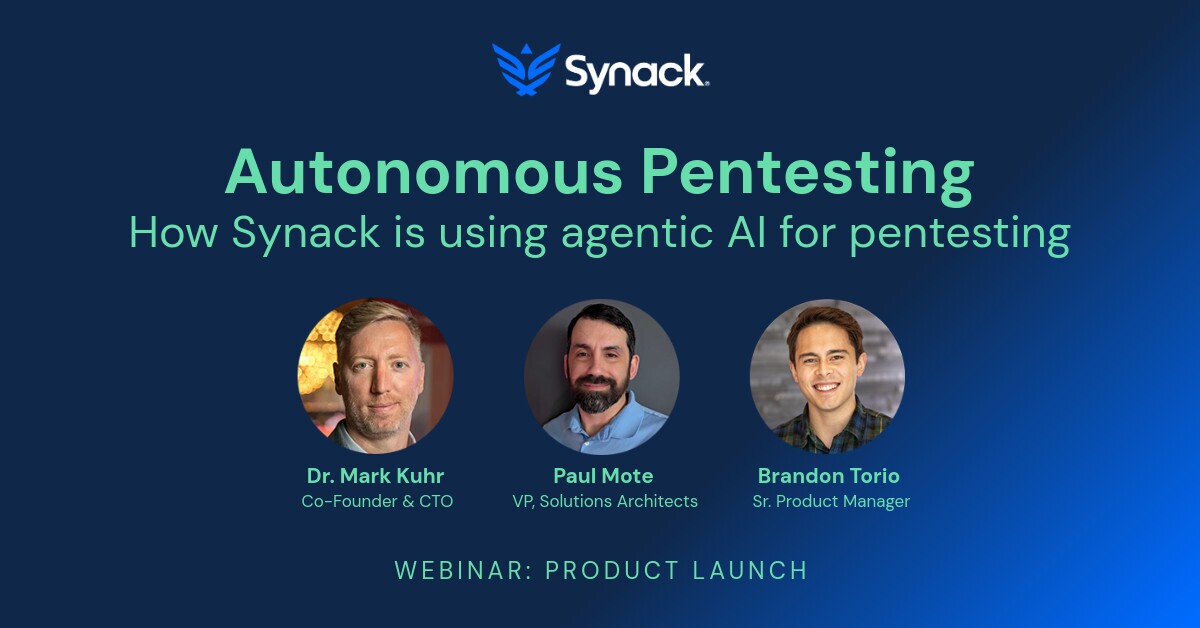
Agentic AI like Sara changes what is possible—not by replacing researchers, but by removing the bottleneck from their workflow. Sara handles the high-volume surface area work: reconnaissance, initial exploit validation, attack path prioritization. SRT researchers focus entirely on the findings that require human judgment.
This is the model that closes the gap automation alone cannot close.
What to Look for When Evaluating Security Validation Vendors
Security leaders evaluating PTaaS and continuous security validation platforms should consider six criteria beyond the headline demo:
1. Researcher Vetting and Accountability
How are researchers selected? What background checks, identity verification, and skills assessments are required? Open crowds and consulting firms answer this question very differently.
2. Agentic AI vs. Rule-Based Automation
Does the platform use genuine agentic AI that adapts to your specific environment—or rule-based scanners marketed as AI?
3. Continuous Coverage vs. Periodic Assessments
Does testing run continuously as your environment changes, or is coverage scoped to individual engagements? Modern cloud environments require the former.
4. Integration With Remediation Workflows
Do findings flow directly into your existing ticketing, SIEM, and development workflows—or arrive as static PDF reports?
5. Regulatory and Compliance Alignment
For government, financial services, and healthcare: does the vendor meet FedRAMP, SOC 2, and sector-specific compliance requirements?
6. Proven Enterprise Outcomes
GigaOm’s 2025 PTaaS Radar recognized Synack as both a Leader and Fast Mover—one of the few platforms rated on both dimensions.
Security Validation Requires an Ecosystem
Security outcomes rarely depend on a single vendor. They depend on how well security programs integrate across the broader environment.
This is why Synack’s partner ecosystem—spanning technology integrators, MSSPs, resellers, and cloud providers—plays a central role in how security validation delivers value at scale.
What Continuous Security Validation Looks Like in Practice
Organizations that move from periodic pentesting to continuous security validation typically see three measurable changes within the first 90 days:
- Faster remediation. Prioritized, validated findings reach development teams immediately. Synack customers average 47% faster MTTR compared to industry benchmarks.
- Expanded coverage. Attack surface visibility grows as new deployments are assessed continuously—Synack customers reduce total testing costs by 32% on average.
- Clearer board reporting. Security leaders report in business outcome language—remediation velocity, residual risk reduction, coverage expansion—rather than vulnerability counts and CVSS scores.
The shift from “we passed our annual pentest” to “we know our current exploitable attack surface” is the shift from compliance posture to genuine security posture.
Ready to see continuous security validation in action? Request a Synack demo →
Frequently Asked Questions
What is continuous security validation?
Continuous security validation is the practice of testing, on an ongoing basis, whether systems can be exploited by real attackers. Rather than relying on annual penetration tests or compliance checkboxes, continuous validation combines human security researchers and AI-assisted platforms to identify and prioritize exploitable vulnerabilities as environments change.
How does continuous security validation differ from a traditional penetration test?
A traditional penetration test is a point-in-time assessment—a snapshot of security posture at a specific date. Continuous security validation tests environments as they change, providing ongoing visibility into new vulnerabilities introduced by code deployments, infrastructure changes, and emerging attack techniques.
What is PTaaS and how does it differ from traditional pentesting?
Penetration testing as a service (PTaaS) delivers security testing through an always-on platform rather than a one-off consulting engagement. PTaaS combines continuous testing coverage, AI-assisted vulnerability discovery, and access to a vetted community of security researchers—delivering faster, broader, and more cost-effective results than traditional consulting-based pentests.
How does AI improve penetration testing?
AI accelerates vulnerability discovery, improves attack surface coverage, and prioritizes findings by exploitability. Synack’s Sara agent handles reconnaissance and initial exploit validation autonomously, freeing elite human researchers to focus on complex chained exploits that require human judgment and creativity.
Why are human security researchers still essential in an AI-first world?
Human researchers bring creativity, attacker intuition, and the ability to chain low-severity findings into critical exploit paths—capabilities automation cannot fully replicate.
What is the difference between Synack and crowdsourced bug bounty platforms?
Bug bounty platforms such as Bugcrowd operate open researcher communities. Synack’s SRT is a closed, elite community—fewer than 10% of applicants are accepted, following rigorous technical assessment, identity verification, and background screening.
How does continuous security validation support board-level reporting?
Continuous validation gives CISOs real-time visibility into exploitable risk—enabling board reporting in business outcome language: remediation velocity, residual risk levels, coverage expansion, and cost efficiency.
Is Synack suitable for government and regulated industries?
Yes. Synack has a strong track record in federal government, financial services, and healthcare—sectors with strict compliance, vetting, and accountability requirements.
Why was Synack recognized at RSA 2026?
Synack won two Global InfoSec Awards for being a Market Leader in AI-Powered Cybersecurity and a Trailblazer in PTaaS.
About the Author
Angela Heindl-Schober is Chief Marketing Officer at Synack, the agentic AI + human security testing platform redefining how enterprises validate and strengthen their security posture. With nearly three decades building and scaling global marketing organizations inside US technology companies, she has partnered with CEOs, boards, and investors to position companies for category leadership and sustained growth.
Before joining Synack, Angela held senior marketing leadership roles at Vectra AI and HYCU, where she was SVP Global Marketing and a member of the Executive Leadership Team. She writes about cybersecurity strategy, CISO leadership, and what it takes to build marketing into a genuine growth engine.